
Meet the Author: Sunny Seki and “The Tale of the Lucky Cat”
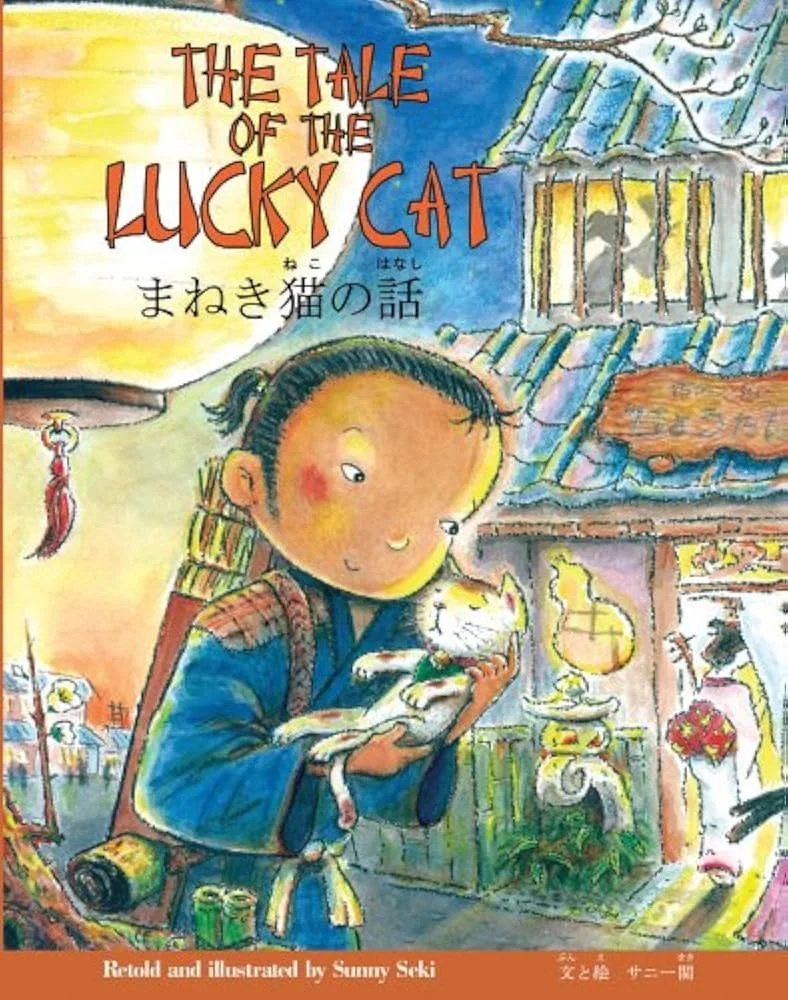
Sunny Seki is a Japanese-American author, illustrator, and storyteller known for sharing traditional Japanese folktales with warmth, humor, and cultural authenticity. Born and raised in Japan, he later moved to the United States, where he became passionate about preserving and passing down Japanese heritage through children’s literature. His work often focuses on introducing young readers to meaningful stories rooted in Japanese history and folklore while making them accessible to modern audiences.
The Tale of the Lucky Cat tells the story behind the famous Japanese “maneki-neko,” the beckoning cat statue believed to bring good fortune. Set in historical Japan, the story follows a poor temple priest and his beloved cat, Tama. The story explains how the image of the beckoning cat became a symbol of luck, gratitude, and unexpected blessings. We interviewed Sunny Seki to learn more about his journey as a storyteller and what the maneki-neko represents to him.
Career & Creative Journey
Q: Can you tell us a bit about your creative journey and what first drew you to storytelling and writing?
Since my childhood, I aspired to become a visual artist; I was always drawing, and won many contests. My family encouraged me to become a photographer, so as part of my studies I ventured outside of Tokyo to the countryside to capture the many scenes that now appear in my illustrations. I pursued and enjoyed this profession for many years. With the advent of the digital age, the market changed, and I started to consider my other passion of illustration. We have nine children, and I always created stories to share at bedtime. My wife suggested that I write children’s books, and this was the beginning of my journey into the published books that I have today.
The Book & Inspiration
Q: What inspired you to write a book centered around Maneki Neko?
I had originally written books about American topics. I joined the Society of Children’s Book Writers and Illustrators, and they suggested that I write about the popular subject of teddy bears. I considered this to be overused, and I felt that I should choose topics related to Japan. Our children had seen Maneki Neko statues, and they asked me about the meaning. I did not know, so I did some research, and from that point decided that my first published book would be about this famous cat. Unlike teddy bears, there were no other existing books about the Maneki Neko. Furthermore, I decided to make the book bilingual, to appeal to both English and Japanese readers.
Q: Was there a specific moment, memory, or feeling that sparked the idea?
When I learned that no other books had been published about the Maneki Neko, I felt a sense of mission.
The Maneki Neko & the Cat
Q: The Maneki Neko is often seen as a symbol of luck and fortune—what does it personally represent to you?
We have always had pet cats; we like them, and know how they bring comfort. Japanese traditionally needed cats, and throughout history have relied on them to protect crops and silkworms against rats and other predators. Cats have good night vision, and provide a mysterious type of protection.
Q: How does the cat in your book mirror parts of your own life or career journey?
Through this book, we have met many cat lovers and members of cat organizations, and it is always special to hear their testimonies and affections for their own cats. Because of this book we discovered the oldest painting (1852) of selling Maneki Neko statues, visited the Japanese Lucky Cat Museum, the famous Gotokuji Temple, and Tokoname, the center of Maneki Neko statue production. With this cat, we were invited to appear on The Disney Channel and BBC. Indeed the Maneki Neko has brought us good luck!
Personal Connection & Meaning
Q: How has your relationship with the Maneki Neko evolved from when you first encountered it to now?
In recent years, manufacturing of Maneki Neko statues has shifted to China, and with this change there has been an influx of new colors and designs. Today many people erroneously believe that the Maneki Neko originated in China, so it has become my mission to show the true origin and meaning. Today’s Chinese cats have come to represent wealth, but the traditional Japanese cats invite people and promote friendship and security, and this is what I need to explain.
Closing & Reflection
Q: What do you hope readers take away from your story and the meaning of the Maneki Neko?
The Maneki Neko represents friendship and positive relationships - not just bringing wealth. The story also reminds us that we need to take care of animals.
Q: If the Maneki Neko could give one piece of advice to someone chasing their dreams, what do you think it would be?
In the story, the cat and toymaker save each other. This story shows us that a good deed is never lost, and it might change our lives forever.
Q: How do you hope this book fits into your broader career and creative legacy?
This book opened the door for me to introduce more characters and cultural icons from old Japan; some of these include the kappa, kokeshi, Daruma, koinobori, and more! Interestingly, many people do not realize that the Maneki Neko is the grandmother of Hello Kitty! Today’s emphasis is on anime and manga, but I do not want readers to forget the true source of these popular fads. My slogan is “New Folktales from Old Japan”, and my goal is to reintroduce and keep alive the true source of our rich Japanese heritage.