
Ringing in the New Year, One Bite at a Time: From Toshikoshi Soba to Osechi Ryōri
As the New Year approaches in Japan, families welcome Oshōgatsu (New Year) with beautifully arranged boxes of traditional foods called Osechi Ryōri. More than just a festive meal, osechi is a culinary expression of hope, symbolism, and intention for the year ahead. Each dish is chosen not only for flavor, but also for the wishes that it represents, such as health and prosperity.
Traditionally packed into tiered lacquer boxes known as jubako, osechi is enjoyed during the first days of January. Below are some classic osechi foods and the powerful messages they carry into the New Year.
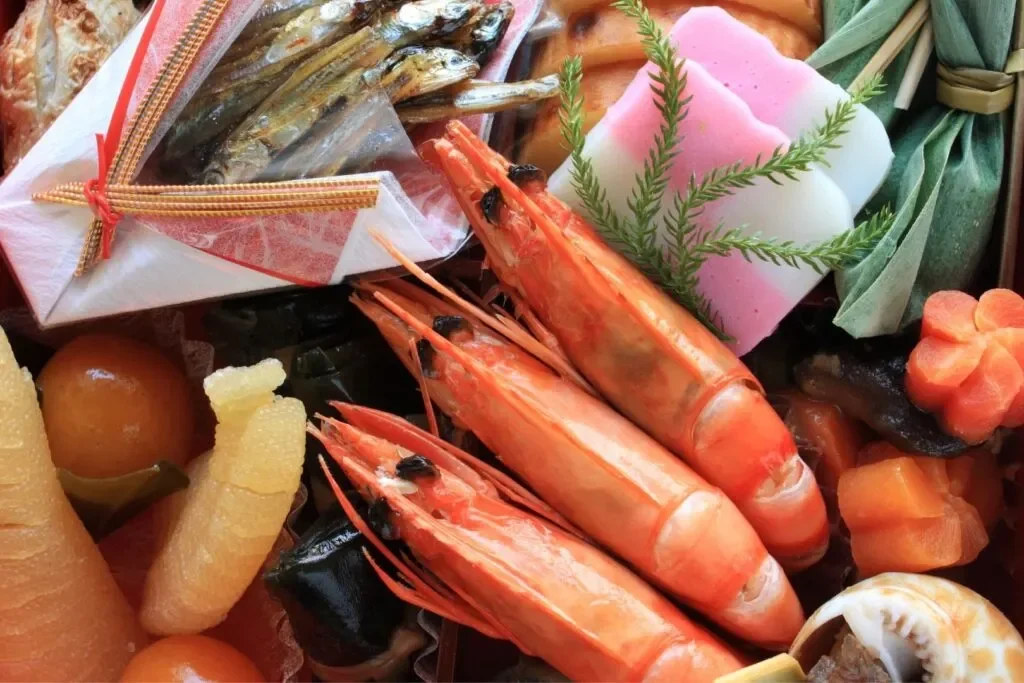
🦐 Hime Ebi — Long Life
Hime Ebi (sweet shrimp) symbolizes longevity. Their curved shape resembles that of an elderly person with a bent back, a visual metaphor for living a long, full life. Including shrimp in osechi is a wish to grow old gracefully, surrounded by loved ones and good fortune.
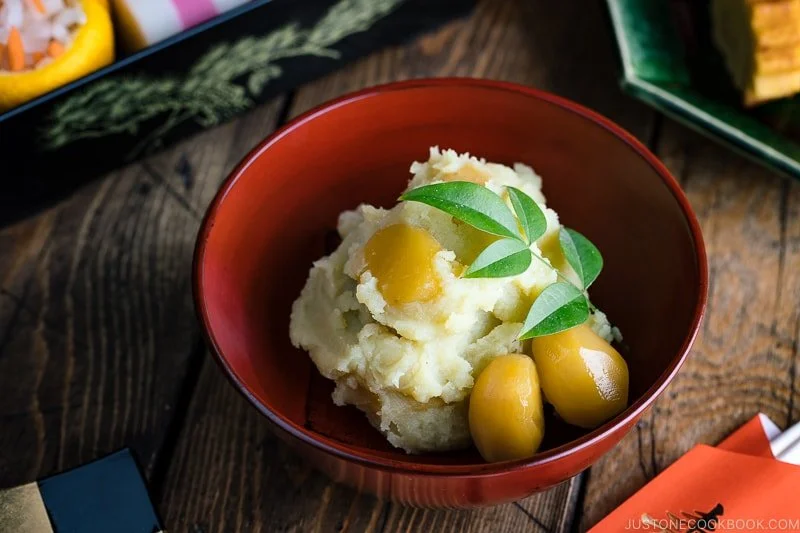
🌰 Kuri Kinton — Wealth & Financial Prosperity
Kuri Kinton, made from mashed sweet potatoes and chestnuts, is prized for its rich golden color. This gold hue represents success and financial prosperity. Filled with sweetness, this dish embodies hopes for abundance and economic stability in the coming year.
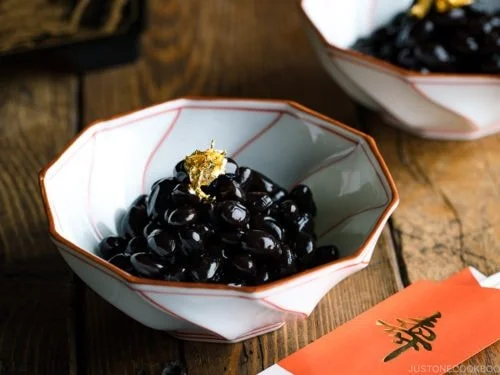
🫘 Kuromame — Health & the Strength to Work Hard
Kuro Mame are sweet simmered black soybeans. In Japanese, mame also means “diligent” or “hard-working,” giving this dish a double meaning. Eating kuro mame is a wish for good health and the ability to work earnestly throughout the year.
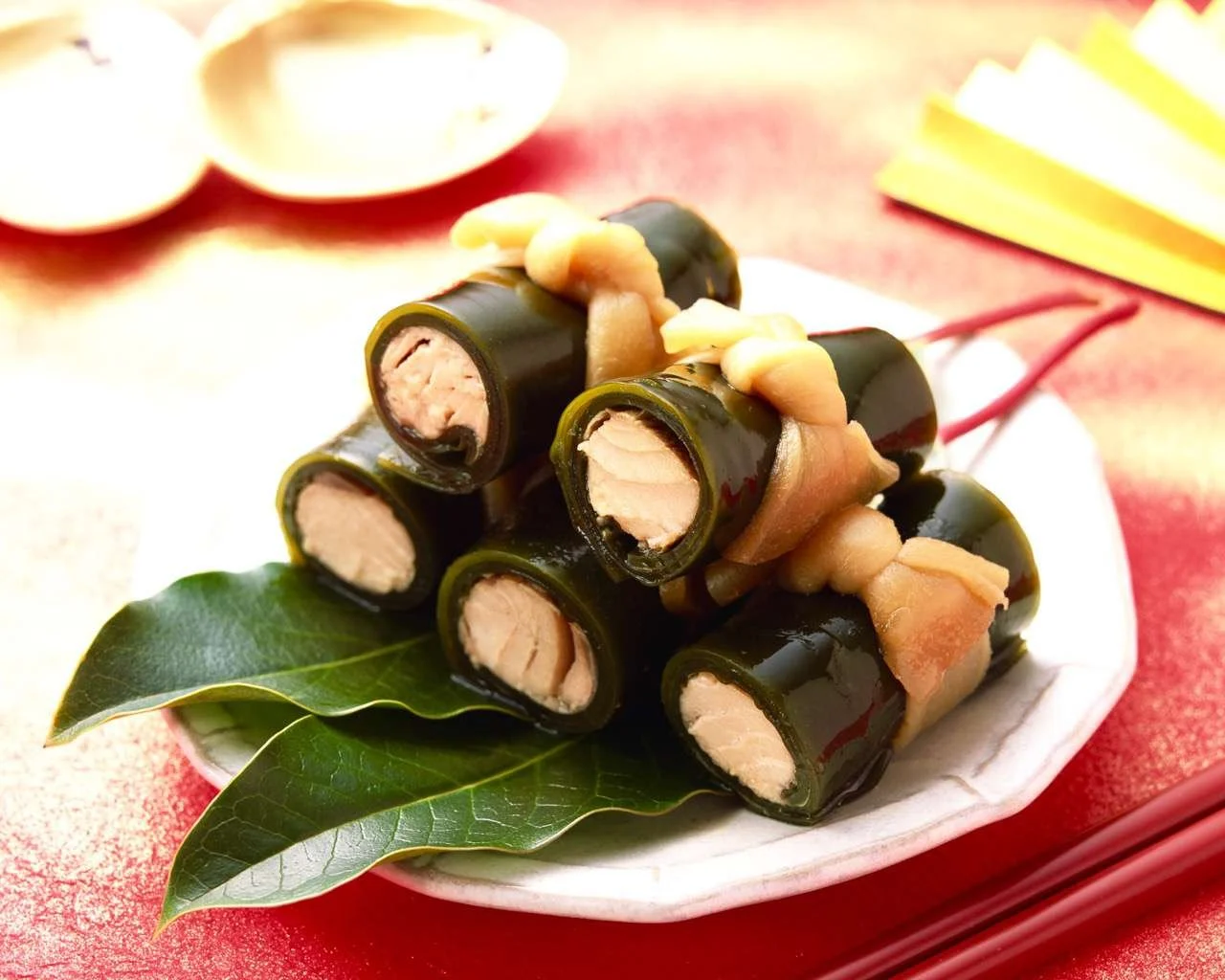
🌿 Kobu Maki — Happiness & Joy
Kobu Maki are rolls of kelp tied or wrapped around fillings. Kobu sounds like yorokobu, meaning “to rejoice.” This wordplay makes kobu maki a symbol of happiness and celebration. It reflects the hope that the New Year will be filled with moments worth rejoicing.
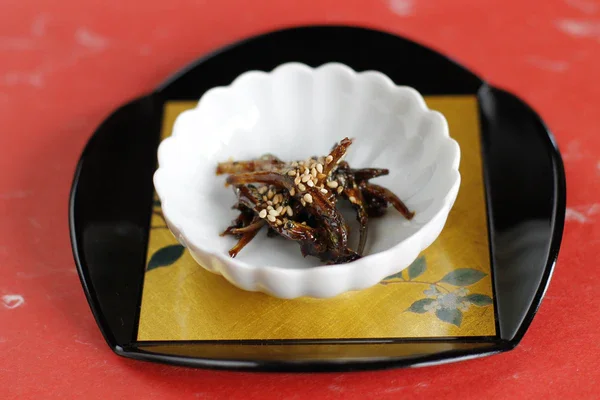
🐟 Tazukuri — Bountiful Harvest
Tazukuri are tiny dried sardines glazed with soy sauce and sugar. Historically, these fish were used as fertilizer in rice fields which symbolizes a bountiful harvest. Today, tazukuri represents success, productivity, and prosperity in both agriculture and business.
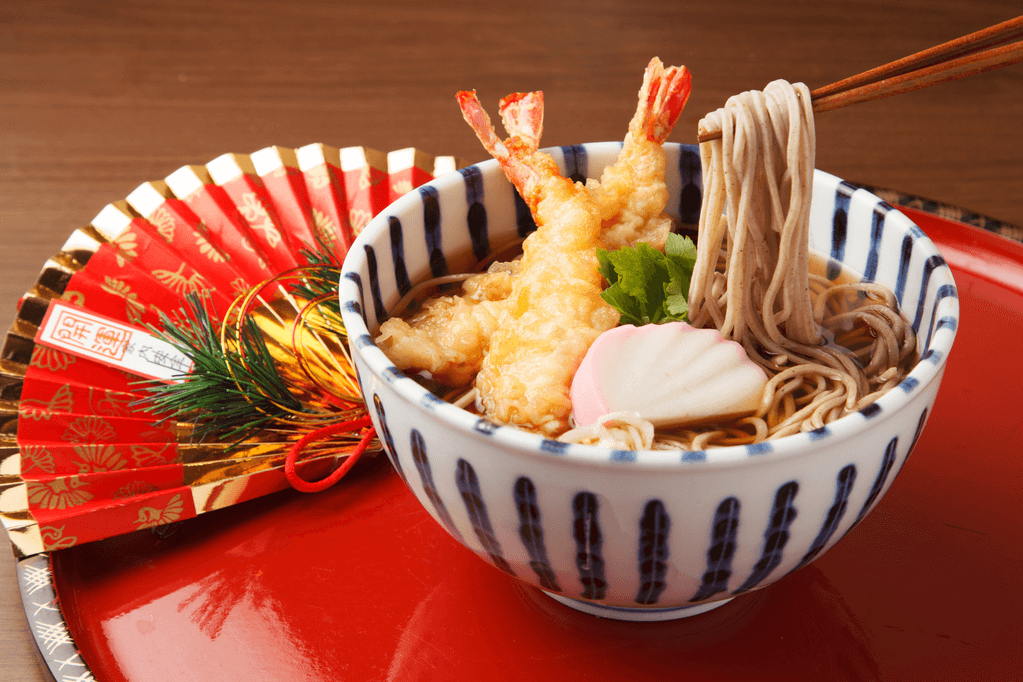
🍜 Toshikoshi Soba — Slurp Away the Past
Before the osechi boxes even come out, there’s Toshikoshi Soba, which is often eaten on New Year’s Eve. These long buckwheat noodles symbolize longevity and resilience, while their easy-to-cut texture represents cutting ties with last year’s stress and bad luck. Slurp them up as a tasty reset button—clearing the past and making a clean, confident step into the New Year.
Welcoming the New Year with Intention
Osechi Ryōri is a reminder that food can be both nourishment and storytelling. Every bite carries a wish, a prayer, and a promise for the year ahead. Whether you’re enjoying a traditional jubako or discovering these dishes for the first time, understanding their meanings reminds us that setting intentions for the future can be delicious and meaningful.
As you welcome the New Year, may your table—and your life—be filled with health, happiness, and abudance. 🎍✨